

Adaptogenic Drinks: The Flavor Challenges Behind the Fizz
Traditional carbonated drinks typically emphasize sweetness, bubbles, and refreshing flavors. Sparkling adaptogenic drinks build on that familiar sensory experience by incorporating functional botanicals, roots, and mushrooms associated with stress management, mental focus, and everyday wellness.
But functional ingredients can introduce formulation challenges that influence flavor, stability, and overall product appeal. Blake Lyon, Applications Manager, and Lisa Jackson, Director of Marketing, share insights on managing formulation challenges and the role flavor plays in creating appealing adaptogenic drinks.
Expansion of Adaptogens in Carbonates
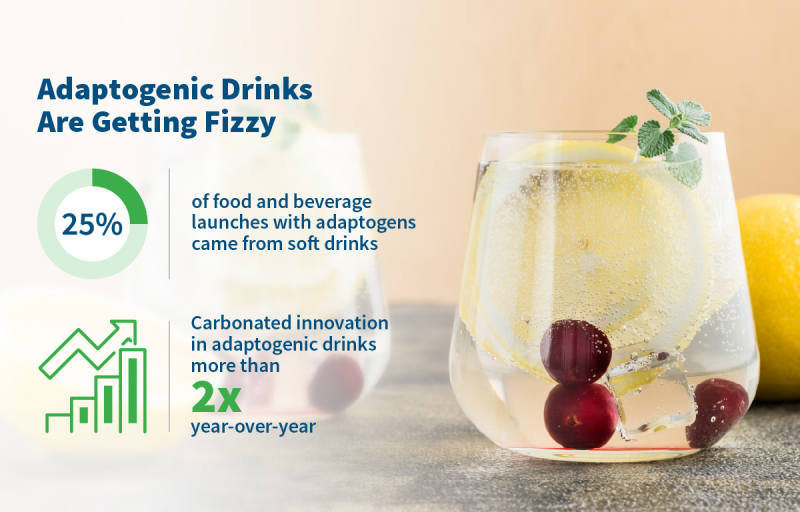
In the 52 weeks ending June 2026, soft drinks accounted for 25% of food and beverage launches with adaptogens (North America, Innova). Carbonates represented almost half of the innovation in adaptogenic drinks, with new product activity more than doubling year-over-year. Innovation in the fizzy format is happening because it aligns with social drinking rituals and importantly, provides you with a framework that helps meet taste expectations.
A bit of fizz links adaptogenic drinks to beer, seltzer, or sparkling cocktails.
Bubbles deliver aromatic flavor notes that build taste appeal.
Carbonated soft drinks built a century-long sensory blueprint for refreshment that’s familiar to North Americans.
The increased North American innovation reflects a growing understanding of adaptogens in functional foods and beverages. In 2021, less than 20 percent of the people surveyed by FlavorSum described themselves as ‘knowledgeable’ about adaptogens, more than half claiming little to no understanding. Our 2026 survey showed almost 30 percent felt knowledgeable while the number of those with limited understanding dropped to 35 percent. You can learn more about our research ici.
Formulation Challenges with Adaptogenic Drinks
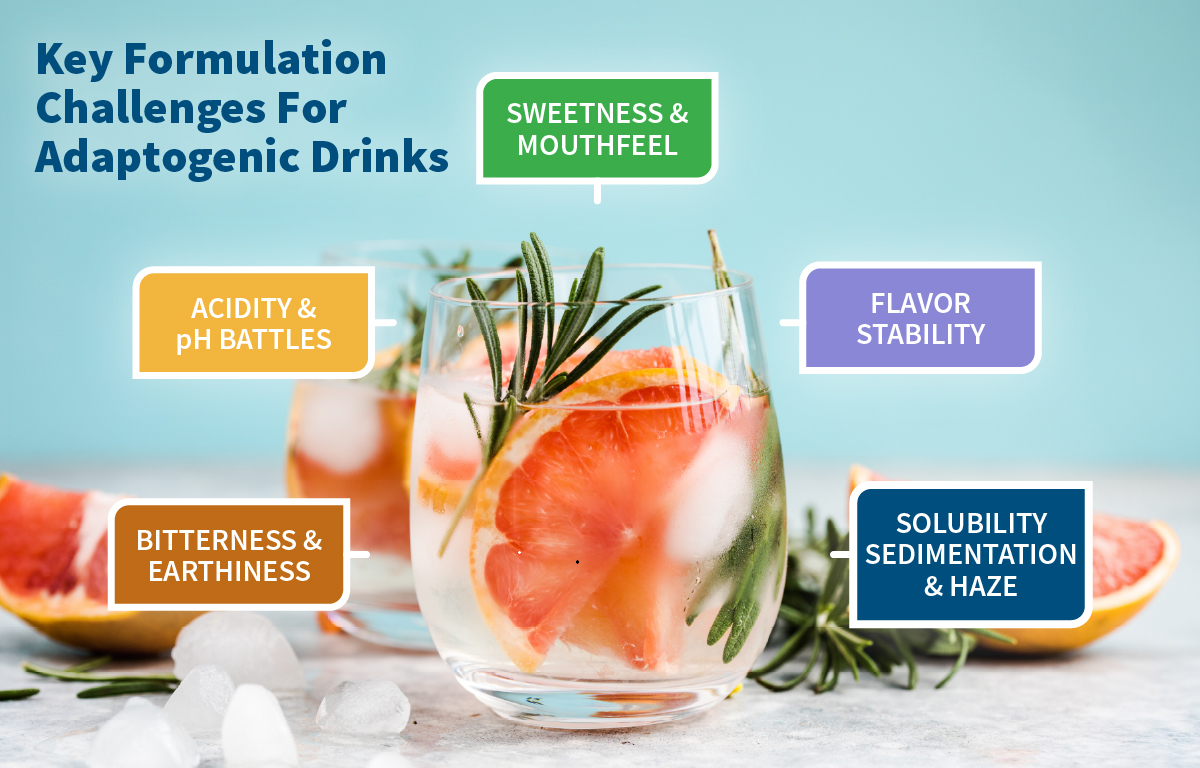
Most adaptogens do not naturally taste good. Botanicals like ashwagandha are bitter, while functional mushrooms like reishi and lion’s mane contribute woody and earthy profiles that can become stronger over time during storage.
BITTERNESS AND EARTHINESS
Although carbonated adaptogenic drinks help deliver aroma, the fizziness needs balance with flavor to avoid sharp or harsh botanical notes. You can use bases like roasted coffee or tea flavored with spices or bright citrus to weave the earthy notes into the experience rather than trying to bury them.
ACIDITY AND pH BATTLES
Carbonated soft drinks typically have an acidic pH, often ranging from approximately 2.6 to 4.6, depending on the formulation. Botanical ingredients, like ashwagandha can taste more bitter, sharp, or metallic in high-acid environments. A buffering system, such as combining malic acid with sodium malate, helps stabilize the target pH and control acidity without intensifying off notes.
SWEETNESS AND MOUTHFEEL
Reduced-sugar adaptogenic drinks can present overlapping challenges: less sweetness to balance botanical bitterness, lingering sweetener notes, and a thinner perceived body. Application scientists and flavorists can recommend solutions to smooth the temporal experience for a satisfying drink.
FLAVOR STABILITY OVER SHELF LIFE
Adaptogenic drinks that taste fresh at the bench can have flavor fade and off notes become more dominant over time. Processing methods and packaging will support ingredient integrity throughout the shelf life of the beverage.
SOLUBILITY, SEDIMENTATION, AND HAZE
Adaptogen powders and mushroom extracts may not fully dissolve in cold liquids, leading to sedimentation or particulate haze over a drink’s shelf life. Depending on the formulation, stabilizers can help manage particle suspension, while cloud emulsions support a consistent beverage appearance.
Flavor Contributes to Mainstream Appeal
People are increasingly looking for functionality in beverages. With adaptogenic drinks, their goal is a familiar, refreshing taste with added benefits. Flavor solutions designed for specific formulation objectives can help you deliver results.
A botanical can contribute flavor while also serving another intended purpose. A key question to answer early in the development process is how much of the desired sensory experience comes from the functional ingredient, a characterizing ingredient, or an added flavor.
Flavorists can help you decide whether to complement, balance or mask the inherent characteristics of adaptogenic ingredients. For example, an earthy mushroom note may work in a spiced or roasted profile but become distracting in a bright citrus soda.
Flavors with modulating properties (FMPs) provide another option when botanical ingredients introduce unwanted bitterness or lingering off notes. Sweetness optimization can also help developers balance taste expectations in reduced sugar adaptogenic drinks without relying solely on added sweeteners.
FITTING FLAVOR WITH FUNCTION
Application scientists and flavorists will look for flavor systems that are consistent with your product’s positioning.
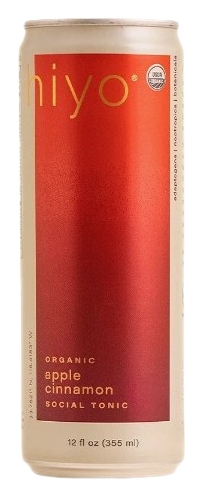
Hiyo Apple Cinnamon Adaptogenic Drink
For example, Hiyo’s recent launch featuring the herbal notes of ashwagandha pairs well with ginger or cinnamon flavors that add warmth to the drink.
If your brand wants to highlight the benefits of lion’s mane and B vitamins, then a bright fruit flavor aligns with your intended taste experience.
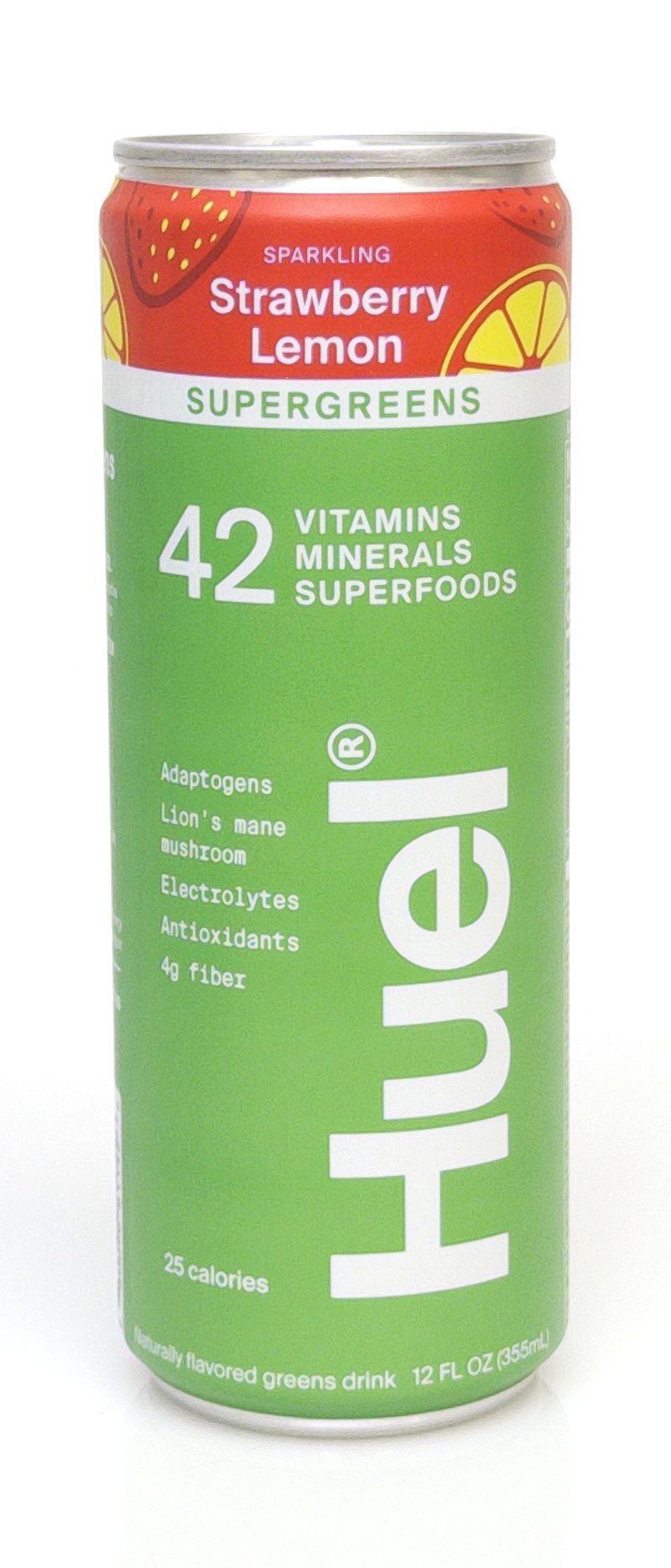
Huel's Strawberry Lemon Supergreens
Strawberry lemon supports Huel’s sparkling adaptogenic drink formula that promotes “steady energy, clarity, gut health, and immunity.”
CHOOSING FLAVOR TO SUPPORT DESIRED EXPERIENCES
While function often leads brand stories, some are shifting from ingredient-led to experience-based innovation. Brands incorporate language and flavors that help people understand the drink’s intentions.
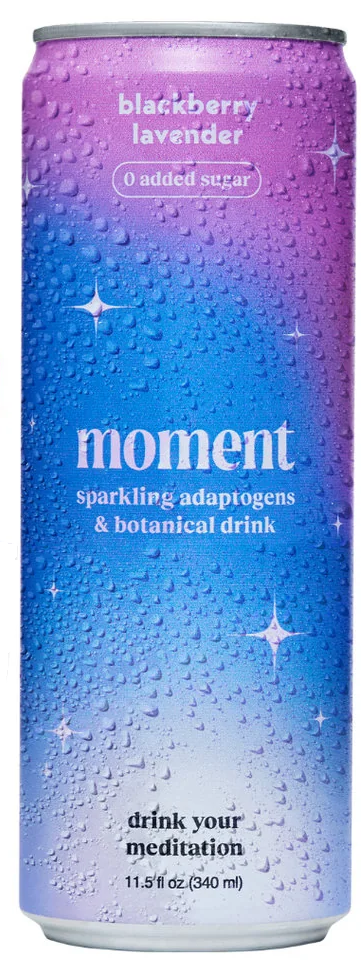
Moment Sparkling Adaptogenic Drink
For example, Moment’s Blackberry Lavender adaptogenic drink promotes Ashwagandha’s support for calm, l-theanine’s effect on clarity, and lavender’s fragrant flavor for balance. The front-of-pack encourages people to “drink your meditation.”
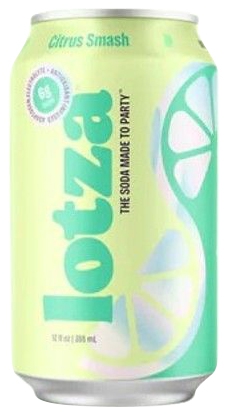
Moment Sparkling Adaptogenic Drink
In contrast, Lotza designed its lemon-lime citrus smash soda with Rhodiola and Schisandra to “support your body while you celebrate” as “the soda made to party.” Brand messaging encourages consumption as a soda, non-alcoholic drink, or cocktail mixer.
Drafting Your Blueprint for Adaptogenic Drinks
The growth of adaptogenic soft drinks illustrates how brands are expanding familiar carbonated beverage experiences with functional ingredients. For product developers, the challenge is balancing the sensory expectations of a refreshing drink with the characteristics of botanicals, roots, and mushrooms.
From managing bitterness and sweetness to supporting flavor stability, FlavorSum’s application scientists and flavorists can help map solutions for your next adaptogenic beverage. Let’s talk about your development plans.

Auteur
Blake Lyon
Blake Lyon est responsable des applications chez FlavorSum. Il possède plus de 13 ans d’expérience dans l’industrie alimentaire et la boisson, dont 11 ans dédiés à la collaboration avec les clients concernant les arômes dans les applications dans le secteur de la boisson. Il a obtenu son baccalauréat en chimie au Monmouth College et a rejoint FlavorSum en 2021.

Auteur
Lisa Jackson
Lisa Jackson, directrice du marketing chez FlavorSum, apporte plus de 30 ans d’expérience en recherche de marché et auprès des consommateurs pour soutenir les activités d’innovation des organisations du secteur alimentaire et des boissons.
Articles de blogue sur le sujet

Tendances en matière de saveurs alimentaires et boissons pour 2027 : stratégies pour offrir des expériences désirables
Découvrez les tendances en matière de saveurs pour 2027 et comment elles peuvent sublimer, harmoniser, apporter du plaisir et garantir la fidélité des expériences alimentaires et de la boisson.

Prévision de l'industrie alimentaire et des boissons 2027 : des changements culturels façonnent l'innovation
Voyez comment les changements culturels modifient la manière dont les gens définissent la valeur, abordent la nutrition, évaluent les marques et trouvent du plaisir dans la nourriture et les boissons.

Comment une maison de la gastronomie peut-elle aider à accélérer le développement de produits ?
Découvrez comment l’expertise en matière de saveurs peut réduire le nombre d’essais, résoudre les problèmes de formulation plus tôt et maintenir la dynamique du développement des produits alimentaires et boissons.